

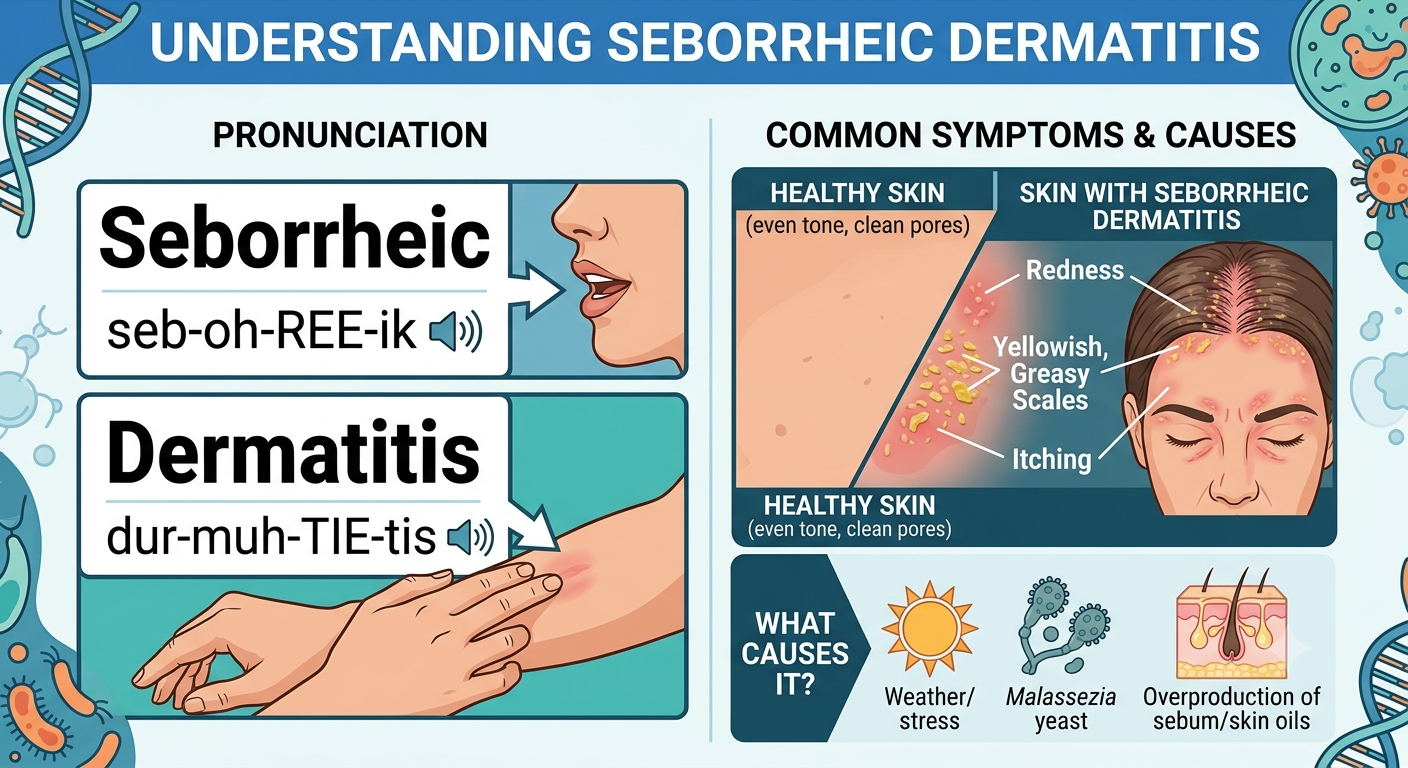
Many people struggle to pronounce medical terms, and seborrheic dermatitis is one of the most commonly mispronounced skin conditions. Whether you have been diagnosed with it, are researching scalp conditions, or simply heard the term from your doctor, learning the correct pronunciation can help you communicate with confidence.
Besides pronunciation, it’s equally important to understand what seborrheic dermatitis is, why it occurs, and how it can be managed effectively.
In this complete guide, you’ll learn the correct pronunciation, meaning, causes, symptoms, treatments, home remedies, and prevention strategies for seborrheic dermatitis.
How to Pronounce Seborrheic Dermatitis
The correct pronunciation is:
seb-uh-REE-ik der-muh-TY-tis
You may also hear healthcare professionals pronounce it slightly differently:
- seh-buh-REE-ik der-muh-TIE-tis
- seb-uh-ROH-ik der-muh-TY-tis
All of these pronunciations are generally accepted, although seb-uh-REE-ik der-muh-TY-tis is the most commonly used in American English.
Pronunciation Breakdown
- Seborrheic → seb-uh-REE-ik
- Dermatitis → der-muh-TY-tis
Practice saying each word separately before combining them.
What Is Seborrheic Dermatitis?
Seborrheic dermatitis is a common inflammatory skin condition that mainly affects areas of the body containing many oil-producing (sebaceous) glands.
It commonly develops on:
- Scalp
- Face
- Eyebrows
- Nose
- Ears
- Chest
- Upper back
The condition often causes flaky skin, redness, itching, and greasy scales.
Although it can look alarming, seborrheic dermatitis is not contagious and cannot spread from one person to another.
What Does Seborrheic Dermatitis Mean?
Let’s break down the medical term.
Seborrheic
“Seborrheic” refers to the sebaceous glands, which produce the skin’s natural oil called sebum.
Dermatitis
“Dermatitis” simply means inflammation of the skin.
Together, the term means skin inflammation occurring in oily areas of the body.
Common Symptoms of Seborrheic Dermatitis
Symptoms vary from mild to severe and often come and go over time.
Common symptoms include:
- White or yellow flakes
- Dandruff
- Greasy patches
- Red skin
- Itchy scalp
- Burning sensation
- Crusty scales
- Oily skin
- Skin peeling
- Mild swelling
Symptoms usually worsen during:
- Winter
- Stress
- Lack of sleep
- Illness
- Hormonal changes
Where Does Seborrheic Dermatitis Occur?
The condition typically appears in oily parts of the body.
Common affected areas include:
Scalp
The scalp is the most common location.
People often mistake seborrheic dermatitis for ordinary dandruff.
Symptoms include:
- Heavy flakes
- Itchy scalp
- Oily scales
- Red patches
Face
Facial seborrheic dermatitis usually develops around:
- Eyebrows
- Sides of the nose
- Beard
- Mustache
- Forehead
Ears
The skin inside and behind the ears may become:
- Red
- Scaly
- Itchy
- Flaky
Chest
Some individuals develop greasy red patches on the center of the chest.
Upper Back
Though less common, flaky patches may also appear on the upper back.
What Causes Seborrheic Dermatitis?
Experts believe several factors contribute to the condition.
1. Excess Oil Production
People with naturally oily skin have a higher chance of developing seborrheic dermatitis.
2. Malassezia Yeast
A naturally occurring yeast called Malassezia lives on everyone’s skin.
In some people, the immune system reacts strongly to this yeast, causing inflammation.
3. Genetics
Family history can increase your risk.
4. Weather
Cold, dry weather often makes symptoms worse.
5. Stress
Stress doesn’t directly cause seborrheic dermatitis but frequently triggers flare-ups.
6. Hormonal Changes
Hormonal fluctuations can affect oil production and worsen symptoms.
7. Certain Medical Conditions
People with the following conditions may have a higher risk:
- Parkinson’s disease
- HIV/AIDS
- Depression
- Neurological disorders
- Weakened immune system
Is Seborrheic Dermatitis Contagious?
No.
You cannot catch seborrheic dermatitis from another person through:
- Touching
- Sharing towels
- Hugging
- Swimming pools
- Hair brushes
It is an inflammatory skin condition—not an infection spread between people.
Who Is Most Likely to Get Seborrheic Dermatitis?
It can affect anyone, but it’s more common in:
- Infants (cradle cap)
- Teenagers
- Adults aged 30–60
- Men
- People with oily skin
- Individuals with weakened immune systems
Seborrheic Dermatitis vs. Dandruff
Many people think dandruff and seborrheic dermatitis are the same.
While related, they are not identical.
| Dandruff | Seborrheic Dermatitis |
|---|---|
| Mild flakes | Thick greasy scales |
| Usually no redness | Red inflamed skin |
| Mild itching | Moderate to severe itching |
| Limited to scalp | Can affect face, chest, ears, and back |
| Easier to control | May require medical treatment |
How Is Seborrheic Dermatitis Diagnosed?
Doctors usually diagnose seborrheic dermatitis through a physical examination.
In rare cases, they may perform:
- Skin scraping
- Skin biopsy
- Fungal testing
These tests help rule out other skin conditions like psoriasis, eczema, or fungal infections.
Treatment Options
Although there is no permanent cure, several treatments effectively control symptoms.
Medicated Shampoos
Doctors commonly recommend shampoos containing:
- Ketoconazole
- Selenium sulfide
- Zinc pyrithione
- Coal tar
- Salicylic acid
Using these shampoos regularly can significantly reduce scalp flakes and inflammation.
Antifungal Creams
Prescription antifungal creams help reduce the growth of yeast on the skin.
Corticosteroid Creams
Short-term steroid creams reduce redness, swelling, and itching during flare-ups.
These should only be used as directed by a healthcare professional because long-term use can thin the skin.