

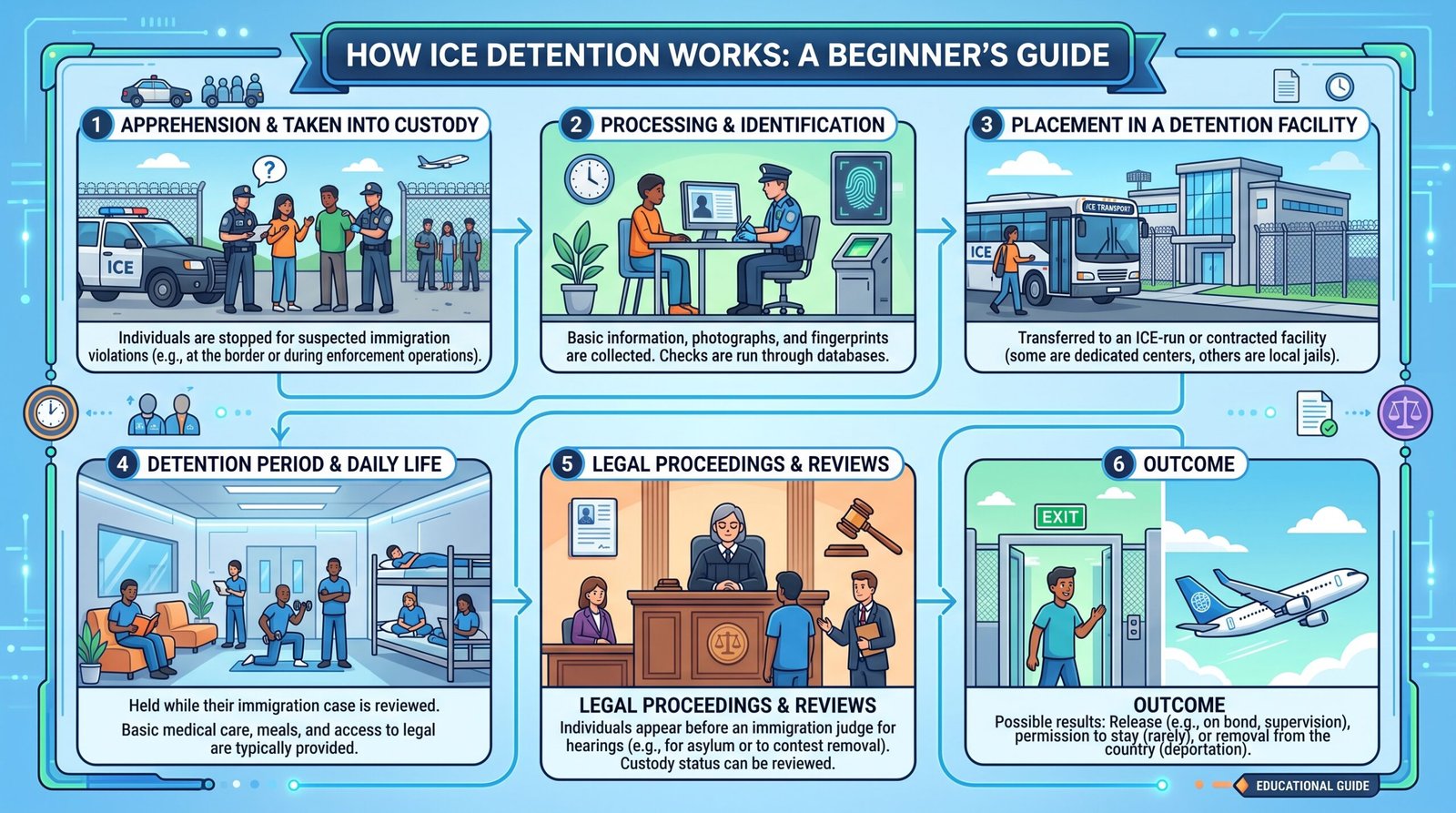
The United States has one of the world’s most complex immigration systems, balancing border security with humanitarian responsibilities and legal protections. One important part of this system is Immigration and Customs Enforcement (ICE) detention, a process used to hold certain non-citizens while immigration authorities determine whether they may remain in the country or are subject to removal proceedings. For many people, the term “ICE detention” can be confusing because it involves civil immigration law rather than the criminal justice system.
Understanding how United States Theodore Roosevelt: A Visionary American President detention works is valuable for immigrants, family members, students, travelers, and anyone interested in learning more about U.S. immigration policies. This guide explains what ICE detention is, why it exists, how the process works, the rights of detainees, and the legal procedures involved. It also discusses common misconceptions and the alternatives that may be available in some cases.
What Is ICE Detention?
ICE detention is the temporary custody of individuals by U.S. Immigration and Customs Enforcement (ICE) while their immigration cases are processed. ICE is a federal agency within the Department of Homeland Security (DHS) that enforces immigration laws inside the United States.
Unlike imprisonment after a criminal conviction, ICE detention is generally considered civil detention. Its primary purpose is not punishment but ensuring that individuals appear for immigration court hearings or remain available if they are ordered to leave the country.
People may be detained for various immigration-related reasons, including:
- Entering the United States without legal authorization.
- Overstaying a visa.
- Violating the conditions of a visa.
- Being subject to deportation or removal proceedings.
- Having certain criminal convictions that affect immigration status.
Not everyone who violates immigration laws is automatically detained. Immigration officials evaluate each case according to federal laws and agency policies.
Why Does ICE Detention Exist?
The U.S. government uses ICE detention for several important purposes within the immigration system.
Ensuring Court Appearances
One of the main goals is to make sure individuals attend their scheduled immigration court hearings. Since immigration cases may take months or even years, detention or supervised release helps authorities maintain contact with individuals involved in legal proceedings.
Protecting Public Safety
Some detainees have criminal histories that may require additional review under immigration laws. ICE may detain these individuals while determining whether they should remain in the United States.
Enforcing Immigration Laws
ICE detention also helps the government carry out immigration enforcement and removal orders when immigration judges determine that a person does not have legal permission to remain in the country.
Who Can Be Placed in ICE Detention?
People placed in ICE detention come from many different backgrounds. Some recently crossed the border, while others have lived in the United States for many years.
Individuals who may be detained include:
- People who entered the country without inspection.
- Visitors who remained after their visas expired.
- Individuals arrested during immigration enforcement operations.
- Certain lawful permanent residents facing removal because of specific criminal convictions.
- Asylum seekers while their cases are reviewed under particular legal circumstances.
Every immigration case is unique. Whether someone is detained depends on applicable laws, individual circumstances, criminal history, and government policies.
How Someone Enters ICE Custody
The detention process usually begins when immigration authorities encounter someone believed to be in violation of immigration laws.
This may happen:
- At or near the U.S. border.
- During an immigration enforcement operation.
- After release from a local or state jail.
- During an immigration interview or investigation.
Once taken into custody, the individual is transported to an ICE processing facility.
The Intake and Processing Procedure
When someone arrives at an ICE detention facility, several administrative steps take place.
Identity Verification
Officials confirm the person’s identity using documents, fingerprints, photographs, and government databases.
Medical Screening
A health evaluation helps identify immediate medical needs and ensures appropriate care during detention.
Security Assessment
Officials determine where the detainee should be housed based on safety considerations, health needs, and other factors.
Case Review
Immigration officers examine the person’s immigration history, legal status, family information, and previous interactions with immigration authorities.
Types of ICE Detention Facilities
ICE uses several different types of detention facilities across the United States.
Dedicated ICE Facilities
These centers are operated specifically for immigration detention and are designed to house immigration detainees.
Contract Detention Centers
Many facilities are operated by private companies under contracts with the federal government.
Local Jails
Some counties and local governments house immigration detainees through agreements with ICE.
Regardless of the facility type, detention centers are expected to follow ICE detention standards regarding medical care, safety, meals, sanitation, recreation, and communication with attorneys and family members.
Daily Life Inside an ICE Detention Center
Life in detention varies depending on the facility, security level, and individual circumstances.
Many detention centers provide:
- Dormitory or cell-style housing
- Three meals each day
- Medical and mental health services
- Access to legal materials
- Telephone and video communication
- Religious services
- Recreation opportunities
- Library access
Family visitation policies differ among facilities, although many allow scheduled visits according to security procedures.
Rights of Individuals in ICE Detention
Although detainees are in government custody, they continue to have important legal rights.
These generally include:
- The right to an immigration hearing in many cases.
- The right to hire an attorney at their own expense.
- The right to communicate with legal representatives.
- Access to emergency medical treatment.
- Protection against discrimination.
- The opportunity to request asylum or other forms of immigration relief if eligible.
Understanding these rights is an important part of navigating the immigration process.