

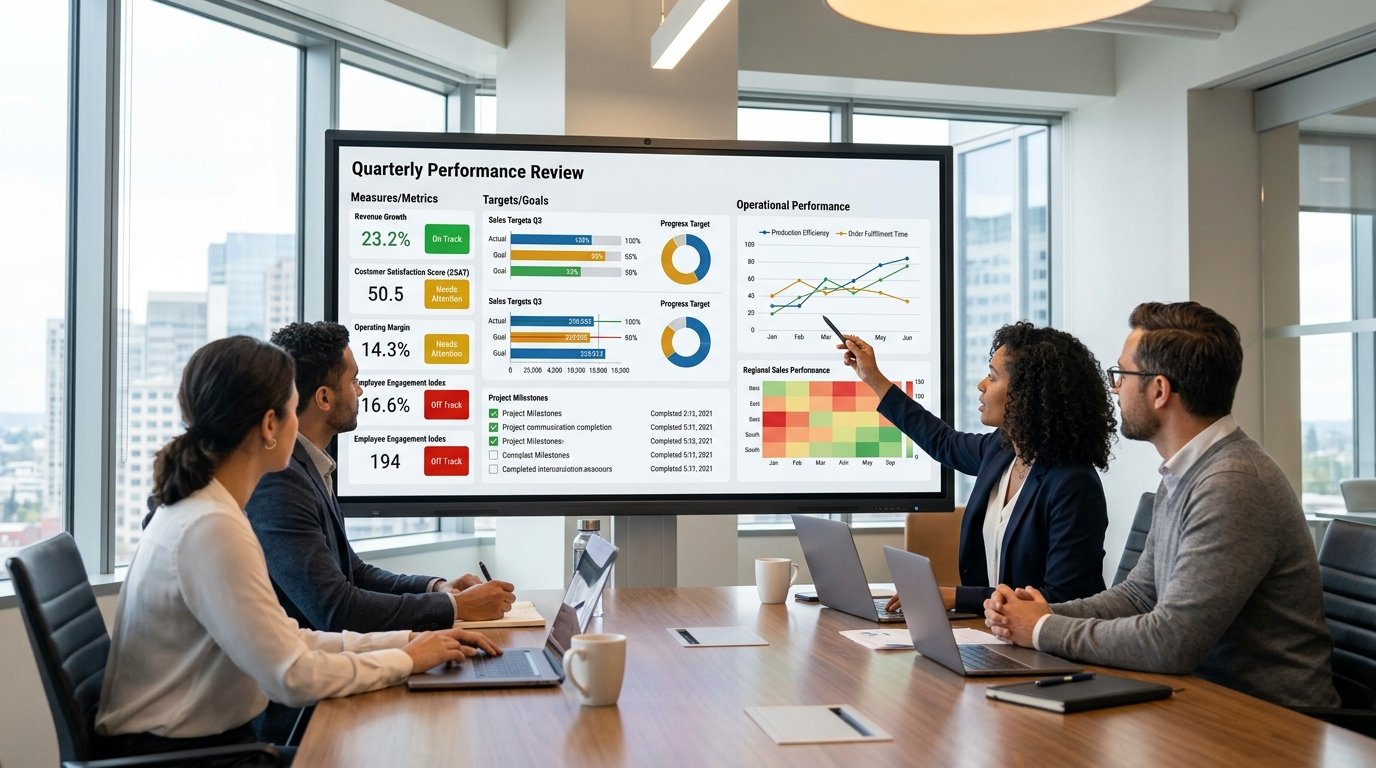
In today’s competitive business environment, organizations must have a clear understanding of their goals, targets, and operational performance to achieve sustainable growth. Measuring performance is not only about tracking numbers; it is about understanding how effectively an organization is moving toward its objectives. A strong performance measurement system helps businesses evaluate progress, identify areas for improvement, and make informed decisions based on accurate information.
Goals provide the foundation for organizational success by defining what a company wants to achieve. They establish direction, create focus, and guide decision-making across all levels of an organization. However, goals alone are not enough. Without proper measurement, businesses cannot determine whether they are making progress or whether their strategies are delivering the expected results. This is why measuring goals, targets, and operational performance is a critical part of effective management.
A structured performance measurement approach allows organizations to convert broad goals into specific, measurable targets. These targets provide clear expectations and help teams understand their responsibilities. For example, a company may set a goal to improve customer satisfaction, but measurable targets such as increasing customer ratings, reducing response times, or improving service quality provide a practical way to evaluate success.
Key Performance Indicators (KPIs) play an essential role in measuring organizational performance. KPIs are measurable values that show how effectively a business is achieving its objectives. They help managers and executives monitor important areas such as sales growth, financial performance, productivity, customer satisfaction, employee engagement, and operational efficiency.
Effective KPIs should be specific, relevant, measurable, and aligned with business goals. Poorly selected KPIs can create confusion and lead to inaccurate assessments of performance. A well-designed KPI system ensures that employees and leaders focus on activities that contribute directly to organizational success.
Measuring goals requires a clear understanding of what success looks like. Organizations must define realistic objectives and establish criteria for evaluating progress. This involves identifying desired outcomes, setting timelines, and determining the resources required to achieve those outcomes. By creating measurable goals, businesses can track improvements and adjust strategies when necessary.
Targets provide a benchmark for evaluating performance. They define the expected level of achievement within a specific period. For example, a sales department may set a target for monthly revenue growth, while an operations team may establish targets for reducing production delays or improving efficiency. Targets create accountability and motivate teams to work toward common objectives.
Operational performance measurement focuses on evaluating how effectively an organization’s daily activities are being managed. It examines processes, workflows, resource utilization, and productivity levels. By monitoring operational performance, businesses can identify inefficiencies, reduce costs, and improve overall effectiveness.
One major benefit of measuring operational performance is improved decision-making. When leaders have access to accurate performance data, they can make decisions based on facts rather than assumptions. Real-time performance information enables organizations to respond quickly to challenges, take advantage of opportunities, and maintain alignment with strategic goals.
Technology has transformed the way organizations measure and manage performance. Modern businesses use digital dashboards, analytics platforms, and automated reporting systems to collect and analyze performance data. These tools provide real-time visibility into business operations and help executives understand trends, patterns, and potential risks.
A smart performance measurement framework integrates data from multiple sources, including financial systems, customer platforms, employee management tools, and operational databases. This creates a complete view of organizational performance and allows leaders to evaluate performance across different departments and functions.
Data accuracy is essential for effective performance measurement. Incorrect or outdated information can result in poor decisions and ineffective strategies. Organizations must establish strong data management practices to ensure that performance reports are reliable, consistent, and accessible to the right stakeholders.
Another important aspect of measuring performance is continuous improvement. Performance measurement should not be viewed as a one-time activity. Instead, it should be an ongoing process of monitoring results, identifying opportunities, implementing improvements, and evaluating outcomes.
Organizations that regularly review their performance metrics can quickly identify problems and take corrective actions. For example, if productivity levels decrease, managers can analyze the reasons behind the decline and introduce solutions such as process improvements, employee training, or resource adjustments.
Employee performance measurement is also closely connected to organizational success. Employees contribute directly to achieving business goals, so their performance should be evaluated using clear and fair criteria. Performance metrics can help organizations recognize achievements, identify development opportunities, and improve workforce productivity.
However, performance measurement should not only focus on results. It should also consider factors such as teamwork, innovation, problem-solving, and employee engagement. A balanced approach creates a healthier performance culture and encourages continuous growth.
Financial performance measurement is another critical area for organizations. Businesses must monitor revenue, expenses, profitability, cash flow, and investment returns to maintain financial stability. Financial metrics help leaders understand the economic health of the organization and make strategic decisions about budgeting and resource allocation.
Customer performance measurement helps organizations understand how well they are meeting customer expectations. Metrics such as customer satisfaction scores, retention rates, feedback analysis, and service response times provide valuable insights into customer experiences. Companies that effectively measure customer performance can improve relationships and build long-term loyalty.
Operational efficiency is often measured through productivity indicators, process completion rates, quality standards, and resource utilization. These measurements help organizations reduce waste, improve workflows, and deliver better outcomes. Efficient operations allow businesses to provide higher value while controlling costs.
Risk management also benefits from performance measurement. By tracking risk indicators and operational trends, organizations can identify potential problems before they become major challenges. Performance data helps leaders develop preventive strategies and improve organizational resilience.
Successful performance measurement requires alignment between individual, departmental, and organizational goals. When employees understand how their work contributes to broader objectives, they become more engaged and motivated. Alignment creates a unified approach where every team works toward shared success.
Communication is another key factor in effective performance measurement. Performance results should be clearly communicated to employees and stakeholders. Transparent reporting builds trust, encourages accountability, and supports collaboration across the organization.
Organizations should also regularly review and update their performance measurement systems. Business environments change constantly, and outdated metrics may no longer provide meaningful insights. Continuous evaluation ensures that performance frameworks remain relevant and support current strategic priorities.
A balanced performance measurement system combines short-term and long-term indicators. Short-term measurements help monitor immediate results, while long-term metrics evaluate strategic progress. This balance prevents organizations from focusing only on immediate outcomes while ignoring future growth opportunities.
The use of analytics and artificial intelligence has further improved performance measurement capabilities. Advanced analytics can identify patterns, predict future outcomes, and provide recommendations for improvement. These technologies enable organizations to move from traditional reporting toward proactive performance management.
In conclusion, measuring goals, targets, and operational performance is essential for achieving business success. It provides organizations with the visibility needed to understand progress, improve efficiency, and make better decisions. Through effective KPIs, accurate data management, and continuous monitoring, businesses can create a strong foundation for growth and long-term competitiveness.
A well-designed performance measurement framework does more than track results; it creates a culture of accountability, improvement, and strategic thinking. Organizations that effectively measure their performance are better prepared to respond to challenges, achieve their objectives, and create lasting value.