
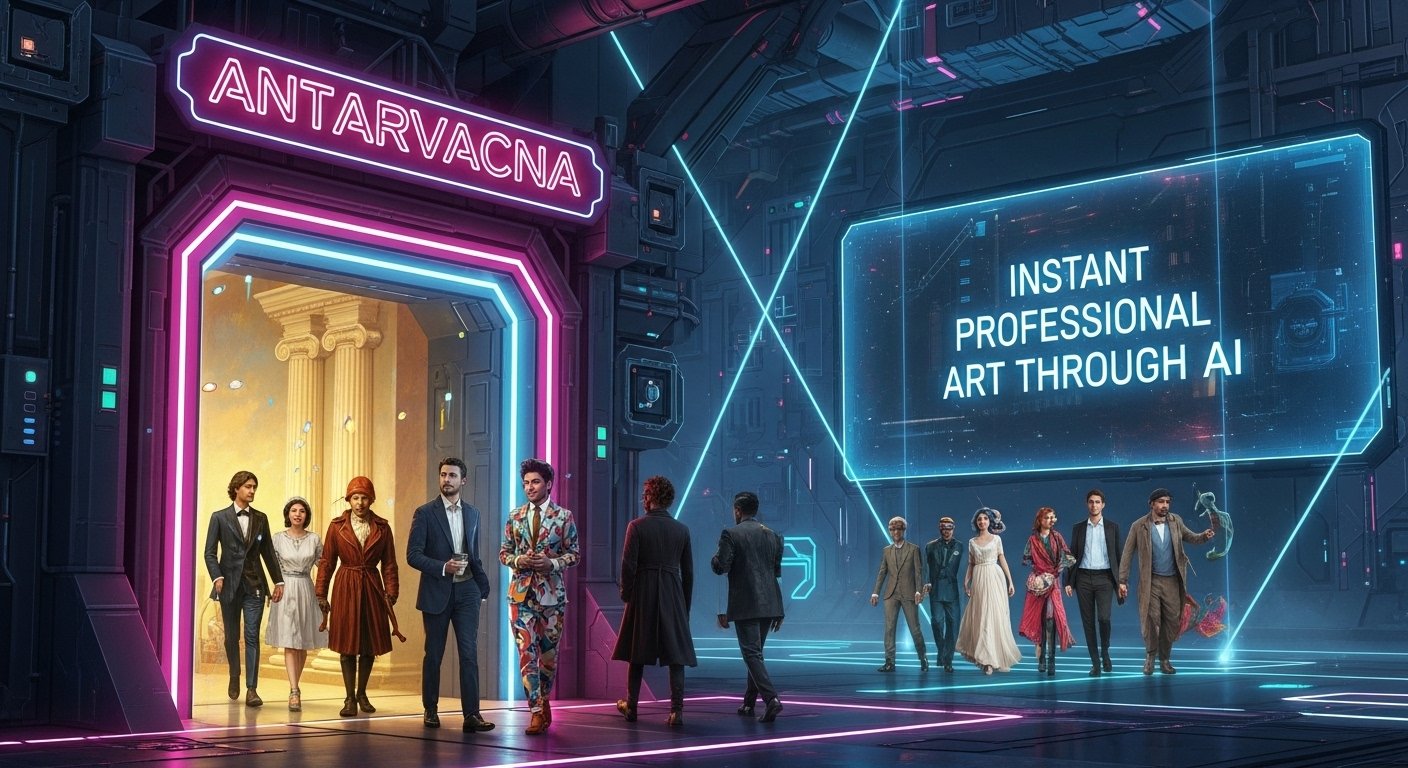
Art has always been a reflection of humanity’s creativity and imagination. But what if technology could step in and create stunning pieces of art at the click of a button? Welcome to Antarvacna, where artificial intelligence meets artistic expression. This innovative platform harnesses cutting-edge AI technology to transform ideas into breathtaking visuals in an instant.
Imagine being able to generate high-quality artwork without needing years of training or specialized skills. With Antarvacna, you can explore endless possibilities and discover how this remarkable tool is reshaping the world of art as we know it. Whether you’re an aspiring artist seeking inspiration or simply curious about the intersection between technology and creativity, Antarvacna offers something truly unique for everyone. Let’s dive deeper into how this fascinating process works and the advantages it brings to both artists and enthusiasts alike!
How Antarvacna Works: Explaining the Process
Antarvacna harnesses cutting-edge AI technology to turn imagination into visual art. At its core, the platform uses advanced algorithms trained on vast datasets of existing artworks. This allows it to learn styles, techniques, and themes from diverse artists throughout history.
When a user submits an idea or prompt, Antarvacna analyzes the input and generates unique images based on learned patterns. Each creation is an amalgamation of various influences, resulting in something fresh yet familiar.
The process leverages neural networks that mimic human thought processes. With each iteration, the AI refines its output based on user feedback and preferences. This constant learning cycle enhances quality over time.
Users can customize their experience by selecting specific styles or elements they want to see reflected in their artwork. In just moments, a seed of inspiration transforms into a stunning piece ready for display or personal enjoyment.
Advantages of Using Antarvacna for Art Creation
Antarvacna offers a remarkable blend of speed and accessibility in art creation. Artists can generate stunning visuals within minutes, freeing them from the constraints of traditional methods.
This AI-driven tool democratizes creativity. Whether you’re an amateur or a seasoned professional, anyone can explore their artistic side without needing extensive skills in painting or drawing.
Moreover, Antarvacna provides endless inspiration. Users can experiment with styles and themes they might not typically pursue. The potential for innovation is boundless.
Additionally, it allows for quick iterations on ideas. Artists can refine concepts rapidly, making adjustments until they achieve the desired result.
There’s an economic benefit too. Reducing material costs while still producing high-quality art makes it appealing to both individuals and businesses alike.
Examples of Art Created by Antarvacna
Antarvacna has revolutionized the art scene with its stunning creations. Imagine vibrant landscapes that blend colors in ways previously thought impossible. Each piece tells a story, evoking emotion and wonder.
Take, for example, a serene sunset over an imaginary ocean. The hues dance across the canvas, merging oranges and blues seamlessly. It’s as if time stands still within this dreamlike world.
Another striking work features abstract shapes swirling together in perfect harmony. The interplay of light and shadow invites viewers to interpret their own meaning.
A portrait created by Antarvacna showcases intricate textures that bring depth to facial expressions. You can almost feel the personality radiating from the artwork.
These examples highlight how AI-generated pieces can captivate audiences while pushing artistic boundaries further than ever before. They challenge traditional notions of creativity while inviting fresh perspectives into the realm of visual arts.
The Role of Human Creativity in Art
Human creativity remains the heartbeat of art, even in an age dominated by technology. While AI tools like Antarvacna can produce stunning visuals, they rely on input from human minds.
Artists bring personal experiences and emotions into their work. This depth adds layers that algorithms can’t replicate. The nuances of a brushstroke or the choice of colors tell stories that resonate with viewers.
Collaboration between humans and AI opens new avenues for expression. Artists can harness AI’s capabilities to amplify their vision rather than replace it. This partnership nurtures innovation while maintaining authenticity.
The interplay between imagination and technology fosters unique creations that reflect both human insight and mechanized efficiency. As artists embrace these tools, they redefine boundaries without losing their intrinsic voice in the process.
Criticisms and Concerns Surrounding AI-Generated Art
Critics often voice concerns about the authenticity of AI-generated art. They argue that such creations lack the emotional depth and personal touch found in traditional artworks. For many, art is a reflection of human experience, something an algorithm cannot replicate.
Another point raised is copyright issues. Who owns the rights to a piece created by AI? Is it the developer of the software or the user who prompted its creation? This ambiguity can lead to legal complications.
Additionally, there are worries about job displacement in creative industries. Artists might find themselves competing with machines capable of producing work at lightning speed. The fear is not just for individual careers but also for cultural diversity in artistic expression.
Some believe that reliance on technology may stifle human creativity rather than enhance it. There’s a real concern that over-dependence on AI tools could lead to homogenized art styles devoid of uniqueness.
The Future of Art and AI Collaboration
As technology advances, the partnership between art and AI is set to evolve in fascinating ways. Artists are beginning to embrace these digital tools, integrating them into their creative processes. This collaboration opens up a world of possibilities.
Imagine artists using AI as a co-creator rather than just a tool. They can explore new styles and techniques that were once unimaginable. The blend of human intuition with machine precision creates unique masterpieces.
Moreover, the accessibility of platforms like Antarvacna democratizes art creation. People from all backgrounds can express themselves artistically without needing extensive training or resources.
The future might also see more interactive installations where viewers influence artwork in real time through AI algorithms. As boundaries blur, we may find ourselves questioning what it means to be an artist in this dynamic landscape. Embracing this evolution could redefine creativity itself.
Conclusion
As we navigate the intersection of art and technology, Antarvacna stands out as a remarkable innovation. This AI-driven platform demystifies the process of creating professional-grade artwork in an instant. By tapping into vast datasets and advanced algorithms, it allows users to generate unique pieces that reflect their visions.
The advantages are clear: speed, accessibility, and an endless array of creative possibilities. Artists can experiment without boundaries while non-artists find a new outlet for expression. The examples produced by Antarvacna showcase this potential beautifully, revealing how AI can translate ideas into stunning visuals.
Yet the discussion around AI-generated art is not without its complexities. Human creativity plays an irreplaceable role in artistic endeavors; it influences every aspect from concept to execution. There are valid criticisms regarding authenticity and ownership which must be considered as we embrace these technologies.
Looking ahead, the collaboration between human artists and AI platforms like Antarvacna promises exciting developments in the art world. As tools evolve and perceptions shift, who knows what masterpieces await? Embracing this change could revolutionize our understanding of creativity itself—blurring lines between creator and creation in ways we have yet to fully explore.